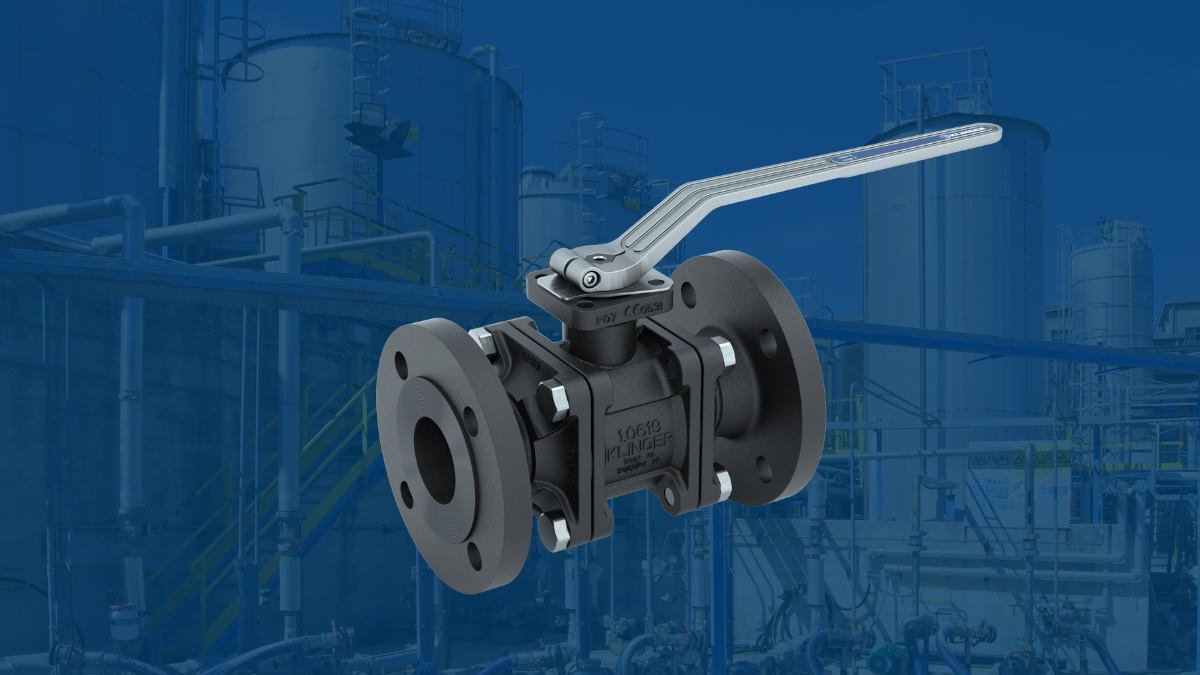
In many process industry projects, valve selection is still primarily based on purchase price, delivery time and product availability. While these are important considerations, they represent only a small part of a valve’s true cost.
In reality, the purchase price accounts for only a fraction of the valve’s total life cycle cost. Maintenance, unplanned downtime, leakage, spare parts and service life ultimately determine which valve solution is the most cost-effective over its entire lifetime. For this reason, valve selection should be based on the process requirements rather than on purchase price alone.
In this article, we use the KLINGER KHA ball valve as an example to demonstrate how valve design, sealing performance and serviceability affect life cycle costs. The same valve selection principles, however, apply to many other industrial valves and applications.
Valve Selection Begins with Understanding the Process
Selecting the right valve does not begin with choosing a valve type—it begins with understanding the requirements of the process.
Before selecting a suitable valve solution, the valve’s function within the process must be clearly defined. Is the valve intended for shut-off service, flow control or preventing pressure surges? The intended application largely determines which valve design is best suited for the process.
What Information Should Be Defined Before Selecting a Valve?
To ensure the correct valve solution is selected, the following process information should be identified at a minimum.
Process
- Valve function
- Process medium
- Flow conditions
Operating Conditions
- Operating pressure and differential pressure
- Operating temperature
- Presence of solids, fibres or crystallising media
Operating Environment
- Installation environment and ambient conditions
- Tightness requirements
- Automation requirements
- Applicable safety and industry standards
The more accurate the process data available during the design phase, the easier it is to select a valve solution that operates reliably while keeping life cycle costs as low as possible.
The right valve solution is neither undersized nor unnecessarily over-engineered. A lightweight valve may wear prematurely, require more maintenance and cause unplanned downtime. Conversely, an oversized solution can increase investment costs without providing additional value to the process. The optimum solution is achieved when the valve design, materials and performance characteristics match the application’s actual requirements.
”The price of a valve should be the result of selecting the right valve—not the starting point.”
– Jukka von Hertzen, Sales Manager, KLINGER Finland
Typical Selection Criteria vs. the Right Selection Criteria
| Primary Selection Criteria | Secondary Selection Criteria |
|---|---|
| Valve function | Purchase price |
| Process requirements and operating conditions | Delivery time |
| Process medium and nominal size | Stock availability |
| Reliability and valve life cycle costs | Previous purchasing habits |
What Makes Up a Valve’s Life Cycle Costs?
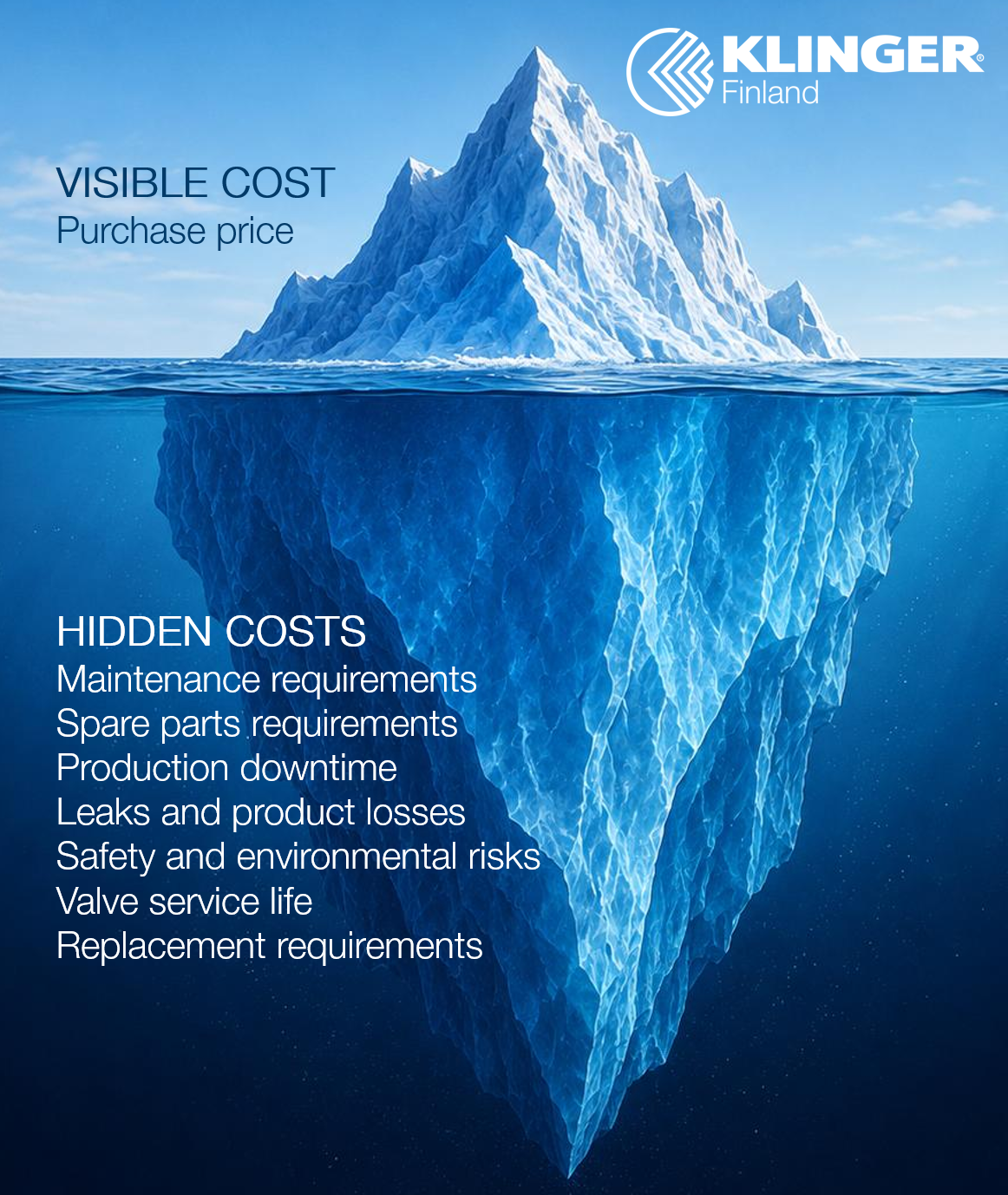
The purchase price is the most visible cost—but often the smallest component of a valve’s total life cycle cost.
The total cost of ownership is influenced by factors such as:
- Maintenance requirements
- Spare parts requirements
- Production downtime
- Leaks and product losses
- Safety and environmental risks
- Valve service life
- Replacement requirements
In many applications, these hidden costs account for the largest share of the valve’s overall cost.
For example, a lightweight valve may appear to be the most economical option during quotation comparison. However, if it requires more frequent maintenance or has to be replaced prematurely, its total cost can quickly exceed that of a higher-quality alternative.
One of the most significant factors affecting a valve’s life cycle costs is its design. Structural design influences durability, sealing performance, serviceability and overall service life.
Why Does Valve Design Affect Service Life?
Valves used in process industries are continuously exposed to mechanical pipeline loads, temperature fluctuations, pressure surges and vibration.
If the valve body is unable to withstand these loads, deformation may occur, compromising sealing performance and accelerating wear.
The KLINGER KHA ball valve is designed for demanding operating conditions.
Its robust body design provides:
- higher mechanical rigidity
- improved resistance to pipeline loads
- greater resistance to thermal expansion and vibration
- reduced risk of leakage
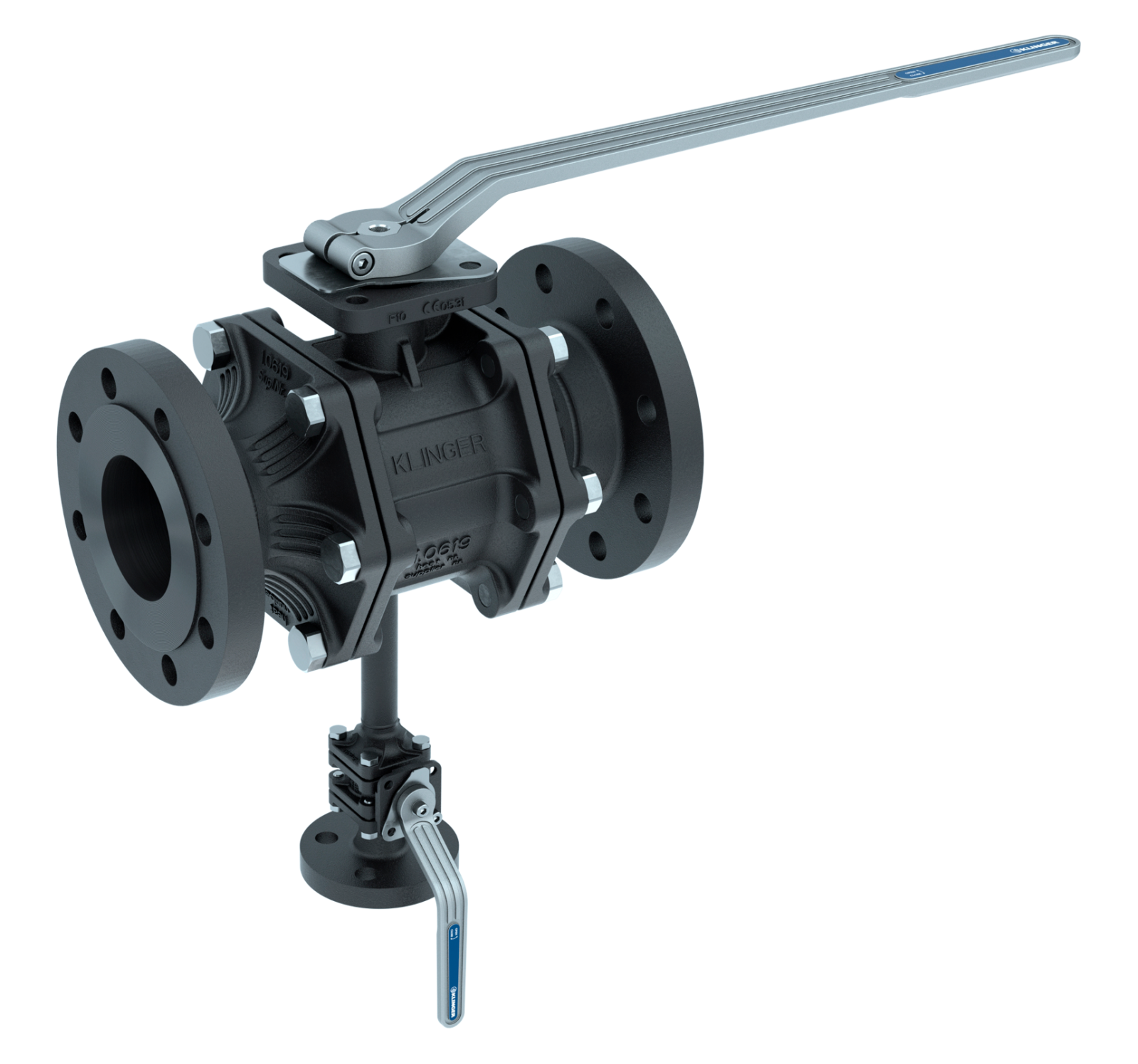
Adequate mechanical rigidity contributes not only to the strength of the valve body but also to sealing performance and service life. The KHA ball valve features a preloaded, metal-reinforced sealing design that maintains tightness under mechanical loading and pressure surges without losing its sealing performance. As a result, the valve continues to operate reliably even under demanding process conditions.
Sealing Performance Determines Valve Reliability
A valve’s primary function is to prevent leakage, and its performance depends on the combined effectiveness of several sealing interfaces.
The critical sealing points in the KLINGER KHA ball valve include:
- Primary Seat Sealing
- Stem Sealing
- Body Sealing
When these sealing interfaces perform reliably, the benefits include:
- lower emissions
- improved operational safety
- fewer process disruptions
- longer service life
- reduced maintenance costs
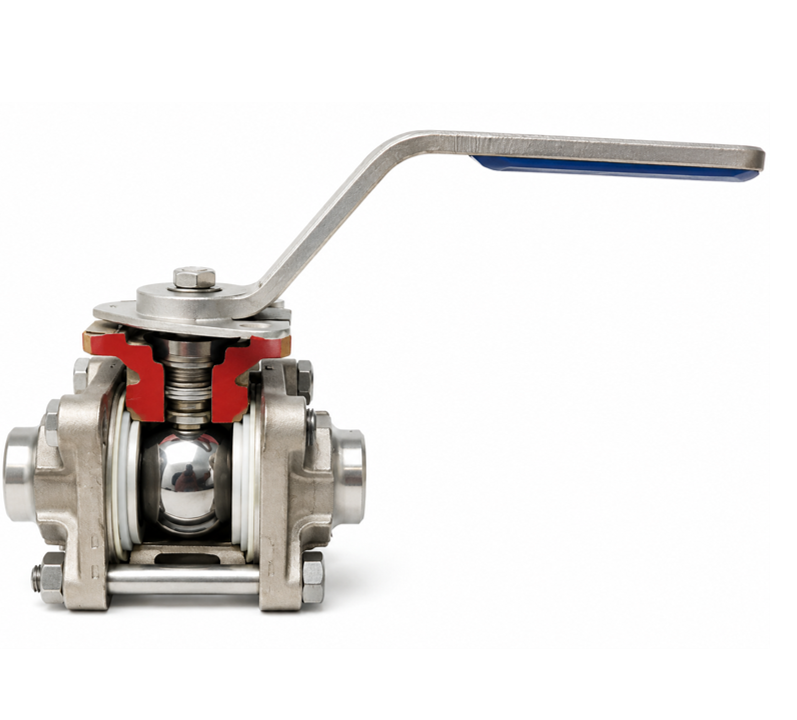
KHA ball valves are available with a range of certified sealing solutions, including Fire Safe, TA Luft, and Fugitive Emissions approvals, supporting safe and environmentally responsible operation in demanding process applications.
A Serviceable Valve Pays for Itself
One of the biggest differences between a high-quality valve and a lower-cost alternative often becomes apparent only after years of operation.
In many lower-cost valves, wear parts cannot be replaced, or maintenance becomes so expensive that replacing the entire valve is often the more economical option.
One of the key advantages of the KLINGER KHA ball valve is its excellent serviceability.
Wear parts can be replaced without replacing the entire valve, which:
- extends valve service life
- reduces material waste
- shortens downtime
- lowers maintenance costs
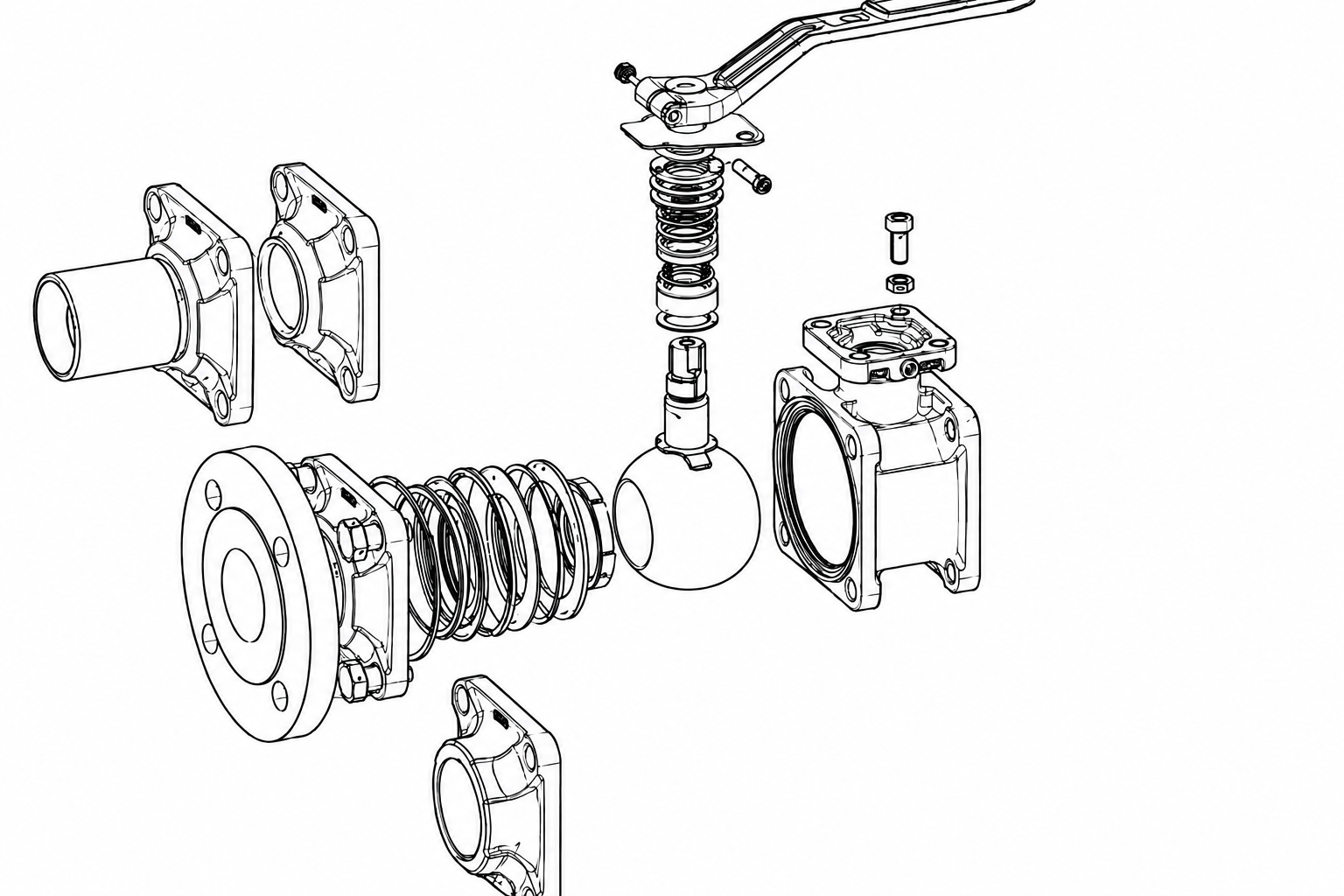
Serviceability is particularly important in applications where replacing a valve requires production to be shut down. When a valve can be serviced instead of replaced, unnecessary investments can be avoided while keeping life cycle costs to a minimum.
Where Does the KHA Ball Valve Deliver the Greatest Benefits?
Not every process requires the same type of valve solution.
The strengths of the KLINGER KHA ball valve become particularly evident in demanding operating conditions, such as:
- high-cycle applications
- applications with high differential pressure
- applications exposed to pressure surges
- fibre-containing media
- abrasive processes
- crystallising media
- high-consistency stock
- demanding chemical applications
In these applications, valve design, sealing performance and serviceability play a particularly important role in ensuring operational reliability, long service life and low life cycle costs.
KLINGER Finland Helps You Select the Right Valve Solution
Valve selection is more than simply choosing a product—it begins with understanding the process.
For decades, KLINGER Finland has helped customers across the process industries identify the right valve solutions for their applications. Extensive experience in the pulp and paper, chemical and energy industries, as well as many other industrial sectors, enables us to identify the factors that have the greatest impact on valve performance, service life and life cycle costs.
”When selecting a valve, the entire application must be considered—including the process medium, pressure, temperature, the presence of solids or fibres, safety requirements and maintenance considerations. The objective is not to offer the cheapest or the most expensive valve, but the solution that provides the highest operational reliability and the lowest life cycle costs. When the process is fully understood, the right valve can be selected.”
– Jukka von Hertzen, Sales Manager, KLINGER Finland
With a comprehensive valve portfolio, extensive technical expertise and professional maintenance services, KLINGER Finland helps customers select the valve solution best suited to their specific process requirements.
Summary
Valve selection is about much more than comparing purchase prices.
Selecting the right valve improves process reliability, reduces maintenance requirements, minimises downtime and lowers life cycle costs throughout the valve’s service life.
A valve’s true value is not determined by its purchase price alone, but by reliable performance, long service life and reduced maintenance requirements.
”A valve doesn’t have to be the cheapest to buy in order to be the most economical to own.”
– Jukka von Hertzen, Sales Manager, KLINGER Finland
Contact Our Experts
Not sure which valve solution is best suited for your process? The experts at KLINGER Finland will help you evaluate your application requirements and select a valve solution that delivers maximum reliability and the lowest possible life cycle costs.
